 By Evelyn
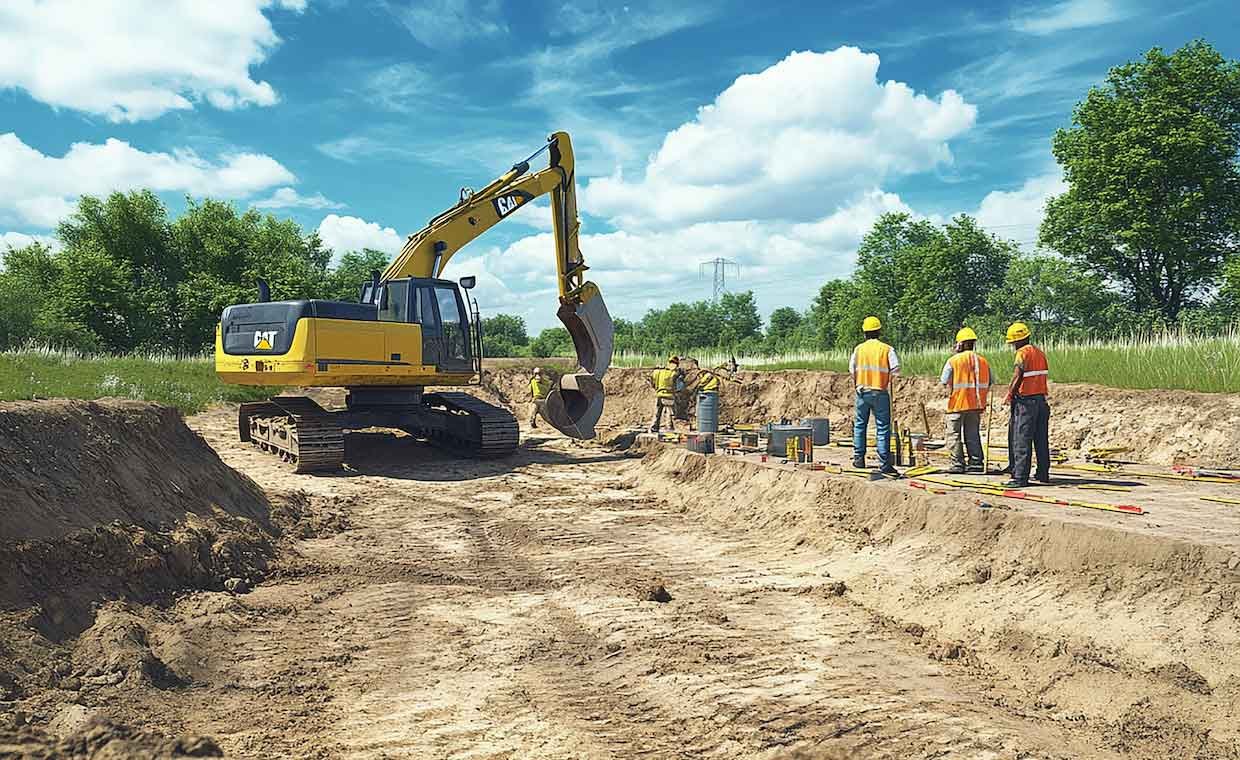
The construction of any successful undertaking commences far in advance of the initial wall or foundation pour. Preparing the ground, removing obstacles, leveling surfaces, and creating stable working conditions are essential steps that determine how efficiently a project progresses. Construction machinery plays a central role in these activities, helping contractors complete demanding tasks with greater precision, safety, and productivity.
From residential developments to large commercial infrastructure projects, modern machinery supports almost every stage of construction. Understanding the functions of different machines allows contractors to select suitable equipment, manage resources effectively, and maintain consistent progress throughout the project.
Site development involves transforming undeveloped or uneven land into a suitable location for construction. This process often requires clearing vegetation, removing debris, excavating soil, and establishing proper ground conditions. Performing these activities manually would demand considerable labor and time, particularly on large projects.
Construction machinery simplifies these operations by providing the power and versatility needed to handle challenging terrain and heavy materials. Excavators, bulldozers, loaders, and graders perform specialized functions that contribute to efficient site preparation.
Selecting appropriate machinery also helps contractors maintain project schedules while reducing unnecessary equipment movement and operational delays. Proper coordination between different machines ensures that each stage of site development supports the next.
Excavators are among the most widely used machines in construction because of their versatility and digging capabilities. They are commonly employed for trenching, foundation excavation, drainage installation, and underground utility work.
These machines feature a hydraulic arm, boom, and bucket designed to remove soil and other materials efficiently. Depending on project requirements, excavators can also accommodate specialized attachments for breaking concrete, handling materials, or clearing vegetation.
Their ability to operate in different ground conditions makes them valuable for both smaller developments and major infrastructure projects. Choosing an excavator with suitable digging depth, operating weight, and reach helps improve performance while maintaining operational safety.
Before excavation begins, construction sites frequently require extensive clearing and rough grading. Bulldozers are particularly useful for these activities because they can push large quantities of soil, rocks, and construction debris across relatively short distances.
Equipped with powerful engines and heavy blades, bulldozers help remove surface obstacles and reshape uneven terrain. Their tracked design provides traction when operating on soft soil or challenging ground conditions.
Bulldozers also assist with spreading materials and preparing surfaces for subsequent grading operations. Their ability to handle demanding earthmoving tasks makes them an important component of large site preparation projects.
Material transportation is another essential aspect of construction site management. Wheel loaders help contractors move soil, gravel, sand, and other loose materials between different working areas.
These machines are equipped with front-mounted buckets that allow operators to collect, lift, and transfer materials efficiently. Their mobility makes them particularly useful on sites where materials must be transported repeatedly over short distances.
Wheel loaders can also support loading operations by transferring excavated materials into dump trucks. When properly coordinated with excavation equipment, they help maintain continuous material movement and reduce interruptions during construction activities.
Once major excavation and earthmoving activities are completed, motor graders help create smooth and properly shaped surfaces. These machines feature adjustable blades that allow operators to control ground elevation and establish suitable slopes.
Motor graders are especially important in road construction, where consistent surface preparation supports proper pavement installation. They also help establish drainage gradients that direct water away from foundations and working areas.
Accurate grading reduces the likelihood of uneven surfaces and drainage problems, supporting the long-term performance of completed structures.
Preparing a construction site involves more than removing and redistributing soil. The ground must also provide sufficient stability to support buildings, roads, and other structures.
Compactors and rollers increase soil density by reducing air spaces within the material. Different machines are used depending on soil composition, site dimensions, and engineering requirements.
Proper compaction helps limit excessive settlement and creates a stronger foundation for subsequent construction activities. Contractors must follow appropriate testing and compaction procedures to achieve the required ground conditions.
Equipment selection should consider project size, soil conditions, available working space, and operational requirements. Larger machines may be suitable for extensive earthmoving, while compact equipment often performs better in restricted residential environments.
Contractors should also evaluate fuel consumption, maintenance requirements, equipment availability, and operator experience. Reliable machinery supported by regular inspections can reduce unexpected breakdowns and improve overall jobsite efficiency.
Construction machinery forms the foundation of efficient excavation and site preparation activities. Each machine contributes specialized capabilities, from digging foundations and clearing land to transporting materials, grading surfaces, and compacting soil.
By understanding these functions and selecting equipment according to project requirements, contractors can improve productivity, maintain safer working conditions, and establish stable foundations for successful construction.