 By Evelyn
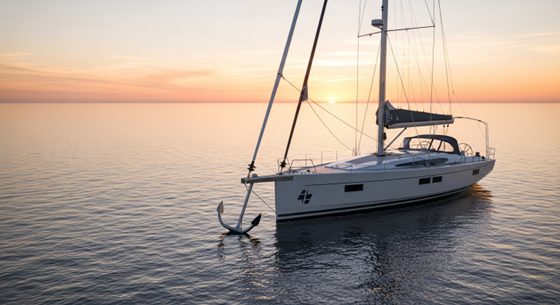
Many boat owners are unaware of the extent of damage that may result from an anchor that regularly hits the bow of a vessel. During anchor deployment and retrieval, scratches, chipped paint, and damaged gelcoat often appear gradually. These issues are most prevalent when the anchor swings against the bow in shifting sea conditions or rests too near the hull. Therefore, a crucial component of safeguarding a vessel’s exterior is proper anchor placement. Installing equipment that increases the space between the anchor and the boat is one workable alternative.
Why Anchor Contact With The Hull Frequently Occurs
Heavy equipment must be lowered and retrieved while anchoring, often when the boat is moving with the wind, waves, or current. Even seasoned boat owners may find it difficult to avoid sporadic contact between the anchor and the hull, particularly in inclement weather.
The ease of handling an anchor is also influenced by the bow’s design. There may be little space between the anchor and the outside surface on boats with steep or curved bow sections. The anchor may swing in the direction of the hull during recovery before coming to rest.
Frequent contact may cause noticeable stains and progressively deteriorate protective coatings. If broken gelcoat on fibreglass boats is not repaired, it might expose underlying materials to dampness. Additionally, scratches that jeopardise protective coatings may occur on metal hulls. These dangers may be decreased by addressing the anchor’s placement.
How To Improve Anchor Clearance With Bow Sprits
Extending the anchor handling point farther forward from the boat is one of the primary uses of bow sprits in anchoring applications. They lessen the possibility of undesired contact during deployment and retrieval by increasing the distance between the anchor and the hull.
An anchor roller or other similar guiding system that steers the anchor away from the bow may be supported by a well-designed bow sprit. This configuration aids in managing the anchor’s motion as it enters or exits the water.
When recovering an anchor in moderate waves, the extra space becomes really useful. The stretched position gives the anchor greater space to travel without hitting the hull right away, even if the boat may still be moving.
However, proper installation, appropriate dimensions, and compatibility with the boat’s current anchoring equipment are necessary for this setup to be successful.
Enhancing The Deployment And Retrieval Of Anchors
Unnecessary issues may arise when an anchor is deployed from a poorly positioned mounting point. The anchor can twist when lowered, snag against the bow, or need to be manually adjusted before going into the water.
The passage for the anchor and rode may be made clearer with an appropriate arrangement of bowsprits. It makes it possible for the anchor to move more smoothly during regular operation when paired with a roller that is positioned correctly.
The roller aids in guiding the anchor to its resting position during retrieval. Crew members may not need to physically relocate heavy equipment by bending over the bow as much because of this controlled movement.
Accurate alignment of the winch, roller, and anchor is particularly crucial for vessels with electric anchor winches. Inadequate alignment might impede retrieval, create friction, or put undue strain on components.
Selecting The Appropriate Bow Sprit For Your Boat
Not every vessel is a good fit for every bow spirit. When choosing equipment, boat owners should take into account the design of their current anchoring system, hull shape, anchor size, and available mounting space.
The construction has to be sturdy enough to support the anticipated loads and provide the anchor ample room. Additionally, materials should have the proper level of corrosion resistance for either freshwater or saltwater settings.
Because improper placement might lessen efficacy or introduce new issues, installation has to be done carefully. The anchor must be able to deploy and return without interference, and the mounting configuration must distribute loads suitably.
To make sure the chosen equipment fits the boat’s design securely, speak with a certified marine installer.
Conclusion
Knowing how the anchor moves during deployment and retrieval is the first step in preventing anchor damage to a boat’s hull. Increased clearance, better anchor direction, and less needless contact with external objects may all be achieved with a well-chosen and placed bow sprit. It provides a useful method of protecting the bow while improving the convenience and control of normal anchoring operations when paired with appropriate anchoring equipment and frequent maintenance.